The Leica M7 is a 35mm rangefinder with aperture priority: you set the aperture on the lens and the camera picks the shutter speed. It was also the first M to read DX codes from the film canister.
Leica M7
35mm film rangefinder, 2002–2018
Updated
Quick facts
- Brand
- Leica
- Type
- 35mm film rangefinder
- Made
- 2002–2018
- Production total
- 28,284
- Preceded by
- Leica M6 TTL
Production
The M7 came out in 2002 and replaced the M6 TTL. Its shutter is electronically controlled, so it depends on its batteries more than the M6 does. If they die, 1/60 s and 1/125 s still work mechanically.
Leica confirmed in June 2018 that it had stopped making the M7. The Leica Pocket Book gives the production period as 2002 to 2019.
Once Leica started its à la carte program, the standard M7 came only with the 0.72x finder. The 0.58x and 0.85x versions could still be ordered through à la carte.
Production figures by year
As listed in the Leica Pocket Book. These probably count serial numbers Leica set aside each year rather than cameras finished that year, which would explain years with none. The book lists no M7s from 2012 to 2019, and prints a total of 29,284, which is 1,000 more than its yearly figures add up to.
- 2001
- 5,000
- 2002
- 14,980
- 2003
- 6,003
- 2004
- 0
- 2005
- 0
- 2006
- 51
- 2007
- 1,000
- 2008
- 500
- 2009
- 0
- 2010
- 250
- 2011
- 500
- Total:
- 28,284
Identification
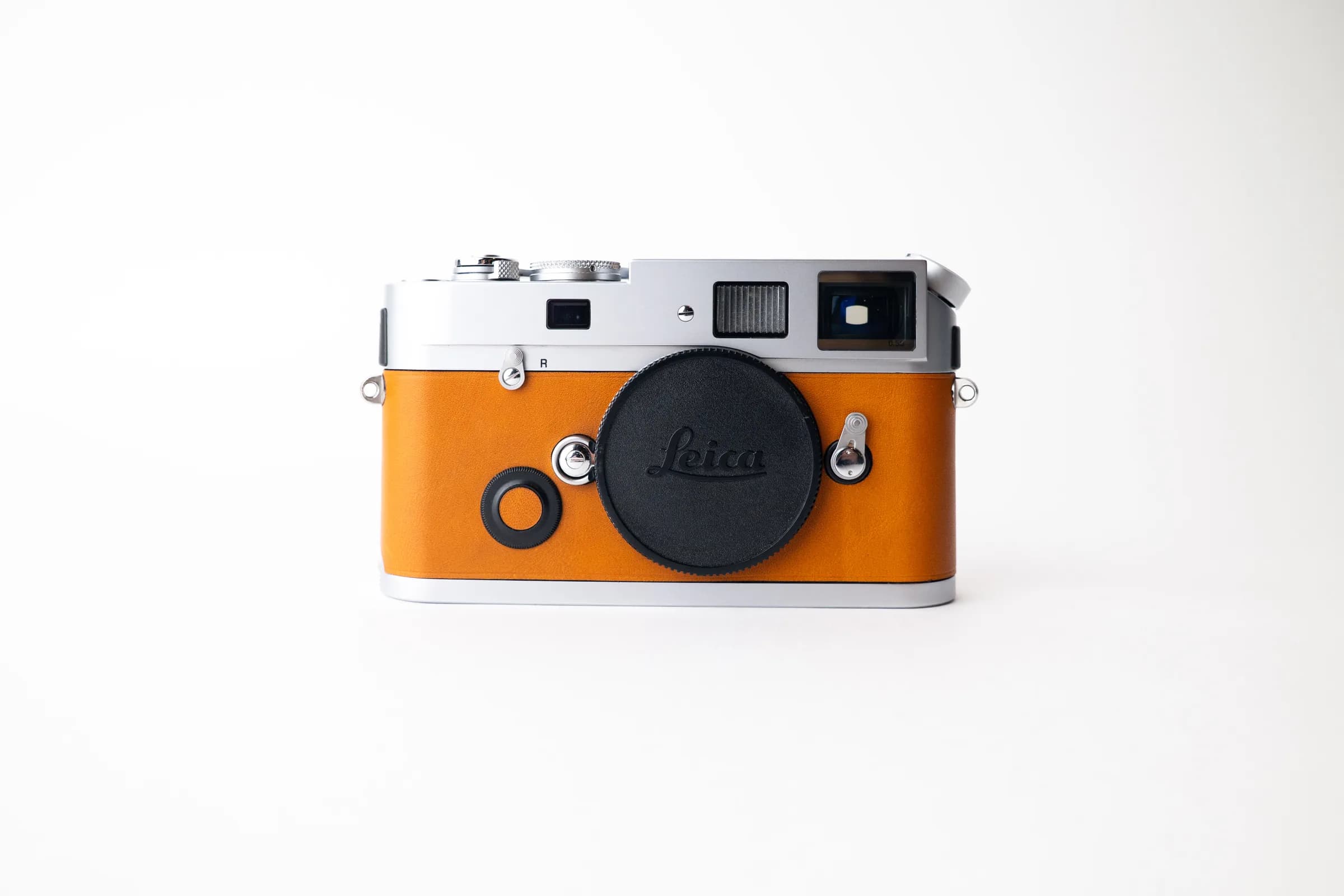
From the front, the M7 has “M7” engraved next to the frame line window. The on/off switch is a collar around the shutter button, and the dial on the back sets film speed and exposure compensation.
The shutter dial has a red “AUTO” between 1000 and B, and two slow speeds the M6 doesn’t have: 2 and 4 seconds.
Film speed comes from the DX code on the canister, or you set it on the dial on the back. In aperture priority the same dial gives up to two stops of exposure compensation either way.
Gallery
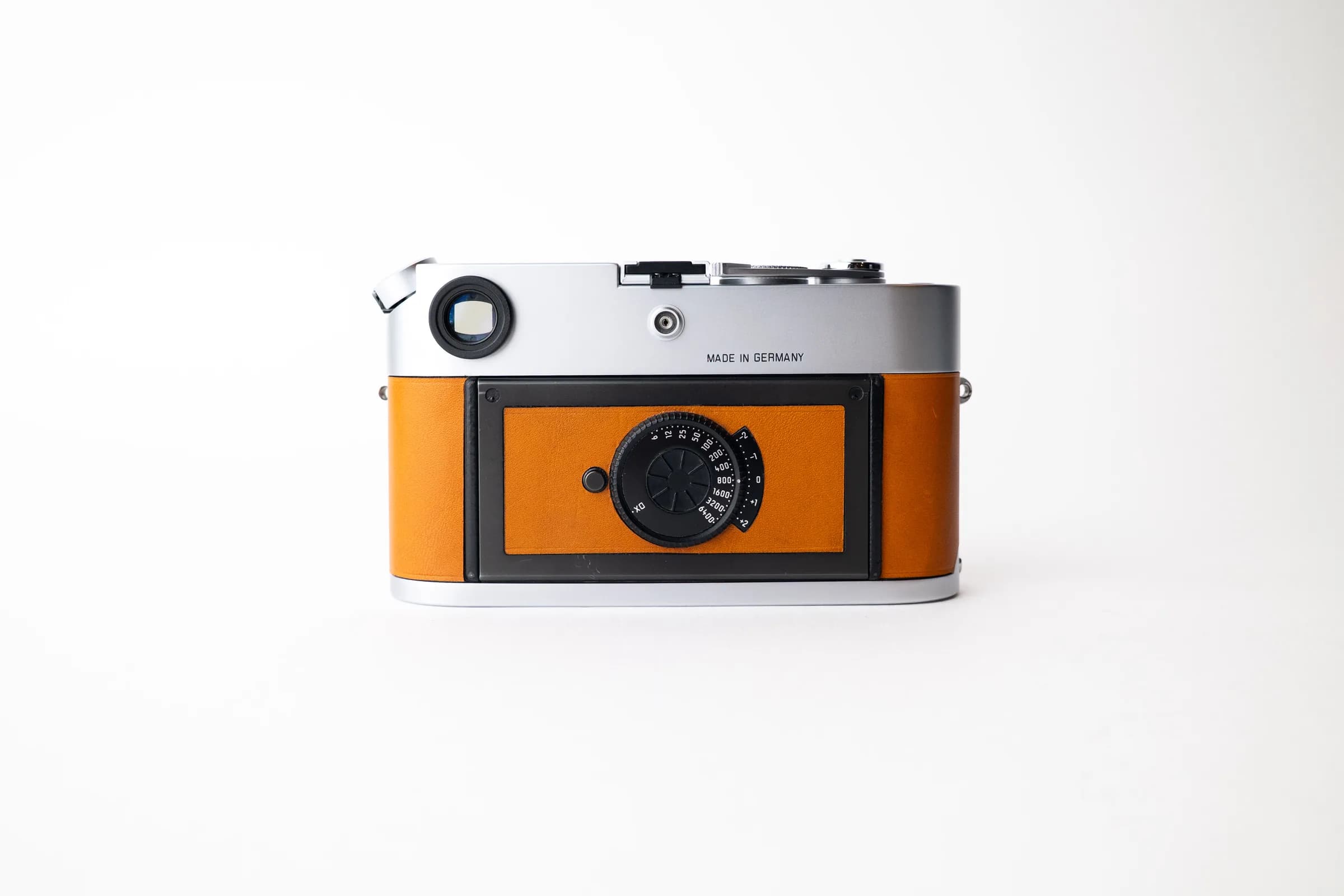
The back, with the dial that sets film speed and exposure compensation. Photo: David Lee
Models
- Leica M7 0.58
- 0.58x viewfinder, with frames for 28, 35, 50, 75 and 90mm. Black only as a standard camera, but à la carte orders could be silver chrome, like the one in our photos.
- Leica M7 0.72
- 0.72x viewfinder, with frames for 28, 35, 50, 75, 90 and 135mm. Black or silver chrome.
- Leica M7 0.85
- 0.85x viewfinder, with frames for 35, 50, 75, 90 and 135mm. Black only.
Special editions
2002
Flag M7 · about 579 made
Demonstration cameras for Leica’s agencies around the world, with a color national flag, map or logo on the top plate. Each country got a different number, from two for Brazil to 100 for the US.
2002
Betriebskamera · about 100 made
Black chrome cameras sold to the public. They’re standard M7s apart from the top plate engraving.
2002
Leitz Midland 50th anniversary · 50 made
A version of the Flag M7 with a Canadian maple leaf logo, marking 50 years of the Leitz plant in Midland, Ontario.
2004
50 Jahre Leica M · 500 made
Solid titanium top and bottom plates, black leather covering and a titanium Summilux-M 50mm f/1.4 ASPH. The top plate reads “1954 – 2004 50 Jahre Leica M System”.
2004
50 Years of Leica M, three-lens set · 50 sets made
Sold with titanium Summilux-M 50mm f/1.4 ASPH, Summicron-M 28mm f/2 ASPH and APO-Summicron-M 90mm f/2 ASPH lenses. Each body’s serial number matches a year of the M system.
2006
China Photographers’ Association 50th anniversary · 51 made
Silver chrome, with “CPA 1956–2006” and Chinese characters engraved on the top plate and a logo on its back.
2009
Hermès · 200 sets made
Silver chrome with Barenia calfskin, sold with a silver chrome Summilux-M 35mm f/1.4 ASPH and a rapid winder. 100 sets in Faubourg orange and 100 in Etoupe grey-brown.
2011
Chinese Revolution centenary · 101 made
Black chrome, specially engraved, with a green ostrich-effect covering.
Specs
- Lens mount
- Leica M
- Exposure modes
- Aperture priority and manual
- Shutter
- Electronic cloth focal plane, 32 s to 1/1000 s in aperture priority, 4 s to 1/1000 s in manual, plus B
- Mechanical speeds
- 1/60 s and 1/125 s, without batteries
- Flash sync
- 1/50 s
- Film speed
- Reads DX codes, or set by hand
- Viewfinder
- 0.58x, 0.72x or 0.85x
- Frame lines
- 28mm, 35mm, 50mm, 75mm, 90mm and 135mm on the 0.72x. See Models for the others.
- Batteries
- Two DL1/3N lithium
- Dimensions
- 138 × 79.5 × 38 mm (5.4 × 3.1 × 1.5 in)
- Weight
- 610 g (21.5 oz)
- Hot shoe
- Hot shoe with TTL flash contacts
- Flash compatibility
- TTL flash metering off the film, like the M6 TTL, with SCA 3000 system flashes. With a Metz 54 MZ-3 it adds high-speed sync up to 1/1000 s and second-curtain sync. Standard flashes work in manual or their own auto mode.
- Dimensions and weight: Lens-DB’s Leica M7 page
Lenses for it
- Leica Summilux-M 35mm f/1.4 ASPH FLE · 35mm f/1.4 lens for Leica M, 2010–2022
Known faults and repairs
Rangefinder patch flare on early cameras
On early M7s, in bright light from the side, the rangefinder patch can wash out to white and make the camera hard to focus. When the MP came out at the end of 2002, Leica changed M7 production to use the MP’s improved finder.
Fix: Leica Customer Care in Germany could fit the improved finder to earlier M7s.
DX reader misreading film speed
The first M7s read DX codes with metal pins that pressed on the canister. They could give the wrong film speed and make the roll hard to take out.
Fix: Leica replaced the pins with an optical reader and upgraded earlier cameras free on request.
Where to get it repaired
- Leica Customer Care
Wetzlar, Germany. Leica’s own service. Book through the online form.
- Leica Camera USA
Teaneck, New Jersey, US. Leica’s own service in the US. Contact Customer Care before you send anything, and include Leica’s repair and service form.
- DAG Camera Repair
Wisconsin, US. An independent Leica and Minox repairer.
We don’t have any arrangement with these shops. Ask about turnaround and price before you send a camera.
External links
Sources
- Leica Pocket Book, 9th edition, Red Dot Photo Books